How to Design a Pool (Step-by-Step Guide for Homeowners)
Learn how to design a pool the right way. Step-by-step guide covering layout, size, features, and common mistakes to avoid before building
Outdoor Draft
3/20/20263 min read
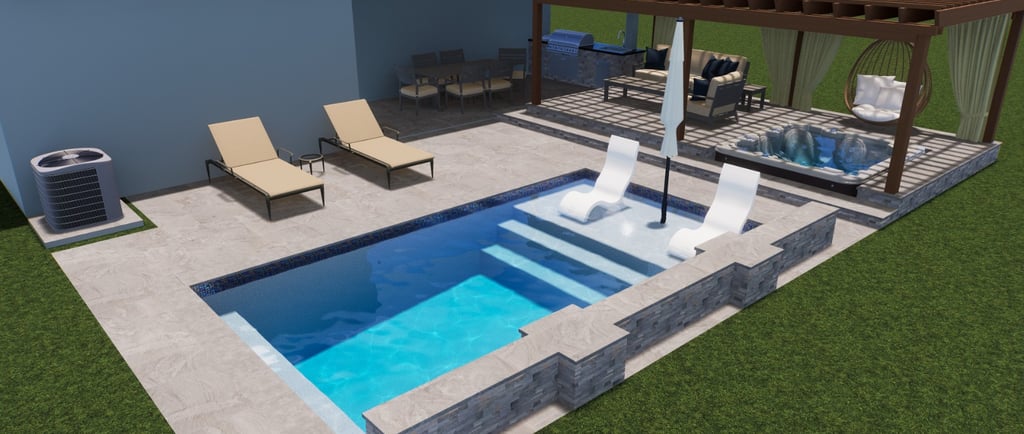
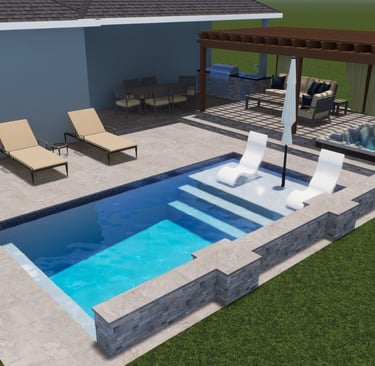
Designing a pool is one of those projects that looks simple from the outside, but once you get into it, you quickly realize how many decisions are involved. Shape, size, layout, elevation, materials, drainage… everything is connected.
A common question homeowners ask is: “How do I design my pool?”
The answer depends on several factors, including your space, budget, and how you plan to use the pool.
Most homeowners start with inspiration from pictures, ideas, or something they saw at a friend’s house. But the real challenge is turning that idea into something that actually works for your space, your budget, and your local requirements.
That’s where a good design makes all the difference.
Start With the Purpose of the Pool
Before thinking about shapes or finishes, the first question should be simple:
Why are you building this pool?
That answer changes everything.
Some people want a space for kids to play. Others are looking for a more relaxing, resort-style environment. Some want to entertain guests, while others are focused on increasing property value.
Each of these goals leads to a completely different design.
For example, a family-focused pool might prioritize shallow areas, safety, and open space. A more modern or luxury design might focus on clean lines, lighting, and integration with the house.
If you skip this step, you’ll likely end up with a pool that looks good, but doesn’t truly fit your lifestyle.
Understand Your Backyard Limitations
This is where most mistakes happen.
A design that looks great on paper may not work at all in real life because of the conditions of the lot.
You need to evaluate:
Available space
Property lines and setbacks
Elevation changes
Existing structures (house, fence, trees)
Drainage conditions
Access for construction
Elevation and drainage often play a major role. Even a small slope can completely change how the pool needs to be built.
HOA requirements and local permitting rules can also limit what you can and cannot do.
Ignoring these factors early on often leads to redesigns, delays, and unnecessary costs.
Choosing the Right Shape and Layout
Once you understand your space, you can start thinking about layout.
There is no “best shape”, only what works best for your specific project.
Freeform pools tend to feel more natural and are great for relaxed, organic designs, but usually more expensive. Rectangular pools are more modern and easier to integrate with clean architectural lines.
But beyond shape, layout is what really defines the space.
You should consider:
How people will move around the area
Where seating areas will be placed
How the pool connects to the house
Sun exposure throughout the day
Privacy from neighbors
A well-designed pool doesn’t feel like something added to the backyard, it feels like it belongs there.
Depth, Function, and Usability
Depth is one of the most underestimated decisions in pool design.
Many homeowners assume deeper is better, but that’s not always true.
If the goal is relaxation and social use, a shallower pool often makes more sense. It’s safer, more functional, and more comfortable for everyday use.
On the other hand, if diving or specific activities are important, then depth becomes a key factor.
You should also consider features like:
Sun Shelves (as known as "Tanning ledges")
Benches and seating areas
Steps and access points
Spa integration
Each of these elements directly impacts both functionality and overall experience.
The Most Common Pool Design Mistakes
After working on multiple projects, some patterns become very clear.
Here are a few of the most common mistakes:
1. Ignoring the overall layout:
Focusing only on the pool and forgetting the rest of the backyard.
2. Oversizing or undersizing the pool:
Too large, and it overwhelms the space. Too small, and it feels limited.
3. Not considering sun exposure:
This directly affects comfort, temperature, and usability.
4. Poor placement of features:
Steps, benches, and spas need to be positioned with intention.
5. Designing without thinking about construction
Some designs look great but are unnecessarily complex or expensive to build.
Avoiding these mistakes can save thousands of dollars, and a lot of frustration.
Think Beyond the Pool
A pool is only one part of the project.
The surrounding space matters just as much.
You should think about:
Decking materials (pavers, concrete, travertine)
Landscaping
Lighting
Outdoor kitchen or seating areas
Fencing and safety requirements
The goal is to create a complete outdoor environment, not just install a pool.
Final Thoughts
Designing a pool is not just about choosing a shape or picking finishes.
It’s about understanding how everything works together: space, function, aesthetics, and construction.
The more clarity you have at the beginning, the smoother the entire process will be.
And in most cases, the difference between a good project and a great one comes down to a good design.
Contact
Let's build your outdoor vision together.
© 2025. All rights reserved.
Social media